 This morning, Air Associates, hosted an open house at the KOJC airport. One of the planes on display was a re-branded Columbia 350. Cessna is calling this plane the Cessna 350. As you might know, Cessna purchased Columbia in late 2007 after Columbia declared bankruptcy. I must say this was a smart move for Cessna, because until now, they did not have anything to compete the composite market.
What were my impressions? I must say, the plane stood much taller than I had imagined — much taller than a Diamond DA40XL. However, the primary competitor is not a DA40XL, but more the Cirrus SR22.
The Cessna 350 had an amazing ramp presence but the visibility from the cockpit was not quite as good as the DA40XL. I have not sat in a SR22, but Cessna reps were claiming that it has more overall glass than the SR22. Another thing I noted was there was more to the cockpit in terms of controls scattered than what I am used to in the DA40XL. The plane does have some advanced features like speedbreaks. I’m not sure we’ll be seeing this plane on the rental line anytime soon, but time will tell.

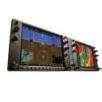 I’ve been flying the Garmin G1000 platform since my first flight in 2006 and it seems that every time I fly, I discover some new feature or function.
 If you were near Kansas City yesterday, it was a perfect day to get some “actual” IMC (Instrument Meteorological Conditions) time logged. We had a cold front slide Southeast in the morning leaving us with temperatures in the 50s and 60s F (10-15 C). The front left a low level cloud deck from about 1000 feet AGL (Above Ground Level) to 3500 feet AGL (several broken layers above) and there was light rain/mist. Below the overcast, the visibility was 7-10 SM (Statute Miles). A great IMC day for doing some approaches.
 I have a confession to make — I love to listen to Air Traffic Control (ATC), even if I’m not in the cockpit. Sometimes driving to work, I will visualize/audibilize communications to ATC as if I were in the air. (It’s also a big hit with my 3 year old). Enough of my personal issues — with the release of BlackBerry OS 4.3/4.5 and higher, it is now possible to listen to live ATC on your BlackBerry as long as you have some type of data service/coverage (EDGE/WiFi/3G, Even GPRS/1XRTT will work).
 According to a post on AOPA’s Pilot Blog, Olathe, KS based
  I am a little bit late to post on this, but according to the April 8th AOPA ePilot, Garmin has announced Synthetic Vision Technology (SVT) for their G1000 platform. SVT will allow for a 3D view of of terrain as you would see it on a VFR day. The best part? It is just a software upgrade, no additional hardware is required — a rare find in the world of avionics.